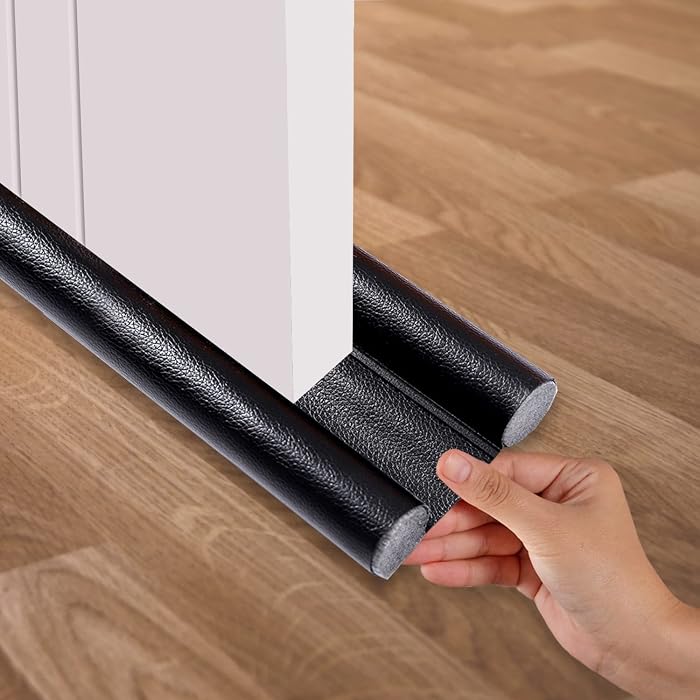
How to choose a door draft stopper
There are three main designs, and the right one depends on your door and your lease. Adhesive sweeps stick a silicone or rubber fin to the bottom of the door — they seal the tightest and stay put permanently, but they are semi-permanent and need a smooth door surface to bond well. Slide-under double-sided stoppers sandwich the door bottom between two foam rolls joined by fabric — no adhesive, no tools, and they move with the door as it opens and closes; renters love them. Weighted “snake” or insert-style stoppers simply lie against the door bottom — the easiest option of all, but they can shift and occasionally need repositioning.
Measure before you buy: the width of your door and the height of the gap. Most stoppers fit doors 30 to 38 inches wide, and many are adjustable or trimmable to size. Most models seal gaps up to 1 to 1.5 inches. A gap bigger than that needs a proper door sweep plus weatherstripping, not a fabric stopper. Also check your flooring — slide-under styles glide fine on hard floors but can drag or bunch up on thick, plush carpet.
Doors with thresholds or uneven sills are trickier: slide-under designs may not fit over a raised threshold, so an adhesive sweep or a slim insert-style stopper usually works better there. For exterior doors, prioritize weather-resistant materials — silicone over fabric — since they will face moisture, dust, and bigger temperature swings. And make sure the door still latches fully after installation; a stopper that is too thick for the gap will fight the latch every time.
On noise, set expectations honestly: a good stopper noticeably muffles hallway chatter and takes the edge off street noise, which is often exactly what a bedroom or home office needs — but no fabric seal soundproofs a hollow-core door. On energy, sealing a drafty door is genuinely effective, and some manufacturers claim up to 20% savings on heating and cooling for the affected room. Your mileage depends on how drafty the door was to begin with, but even modest savings pay back a low-cost stopper fast.
Finally, consider looks and upkeep. Fabric-covered models come in colors to match your décor, and most have machine-washable covers. Adhesive silicone sweeps are nearly invisible once installed but collect dust along the fin. If you have pets, choose a sturdy cover — claws test everything — and darker colors if shedding is a factor.
- Type: adhesive sweep for the tightest seal, slide-under for renters, insert for simplicity.
- Fit: match your door width (most fit 30–38″) and gap height (most seal up to 1–1.5″).
- Flooring: slide-under models can drag on thick carpet; adhesive sweeps work everywhere.
- Thresholds: raised sills usually need an adhesive sweep rather than a slide-under.
- Material: silicone for exterior doors and moisture; washable fabric for interiors.
- Noise: expect real muffling of chatter and street sound — not true soundproofing.
The top picks
Affiliate disclosure: As an Amazon Associate I earn from qualifying purchases. Read our full disclosure.
1. Holikme 2 Pack Door Draft Stopper
The adhesive seal
For the tightest seal, adhesive wins — and this 2-pack is the long-running favorite. Each 39-inch silicone strip bonds to the door bottom with strong adhesive, filling gaps up to 1 inch on wood, glass, metal, or plastic doors. Because it is bonded to the door, it never shifts, never needs repositioning, and seals consistently every time the door closes — while also blocking noise, dust, and light. The 2-pack covers two doors (or one double door), and reviewers report them staying put for years. Warm the strip with a hair dryer before installing in cold weather, and leave the door alone for 12–24 hours so the adhesive fully cures.
Pros: The tightest, most permanent seal of the three types; 2-pack covers two doors; silicone resists heat, cold, and moisture.
Cons: Semi-permanent — removing the adhesive takes effort; needs a smooth, clean door surface to bond; you must avoid using the door for 12–24 hours after install.
Check current price on Amazon →2. MAXTID Under Door Draft Blocker (38″)
The renter-friendly favorite
The classic double-sided design: two foam rolls joined by fabric slide under the door and hug both sides, moving with the door as it opens and closes — no adhesive, no tools, no landlord negotiations. It adjusts to fit doors from 32 to 38 inches and seals gaps up to 1.4 inches, wider coverage than most competitors. Reviewers praise it for bedrooms and apartments where hallway noise, cooking smells, and light bleed were the real complaints. It comes in black, grey, white, and brown to blend with your décor, and the fabric wipes clean.
Pros: Zero-install — slides on in seconds, fully renter-friendly; double-sided seal blocks drafts from both directions; adjustable 32–38″ fit with the widest gap coverage here.
Cons: Does not suit doors with raised thresholds; the fabric cover can drag on thick carpet; may need occasional repositioning on very smooth floors.
Check current price on Amazon →3. Ciieyuo Premium Velvet Door Draft Stopper
The plush insert
If your draft stopper is going to be visible, it might as well look good. Ciieyuo’s insert-style stopper wraps foam in premium velour fabric — soft to the touch, in neutral colors like beige, and noticeably plusher than standard polyester covers. The insert design slides under doors 30–36 inches wide with no adhesive, sealing gaps up to 1.5 inches while blocking noise, dust, and light. Reviewers like it for living rooms and nurseries where both looks and quiet matter, and the scratch-resistant fabric holds up well around pets. No tools, no curing time — just slide it in.
Pros: Premium velour look and feel — the nicest-looking pick; no-adhesive insert installs in seconds; seals gaps up to 1.5″ plus noise, dust, and light.
Cons: The insert style can shift on very smooth floors; single width range (30–36″); plush light fabric shows pet hair more than dark covers.
Check current price on Amazon →4. GDHOMM Under Door Draft Stopper (Adjustable 30″–36″)
The washable adjustable
A double-sided slide-under with two practical twists: the foam rolls are removable, so the velvet cover is machine washable, and the length adjusts from 30 to 36 inches with a fold-and-stick design — trim the foam with scissors for a truly custom fit. The dual-layer foam is thicker than average at 1.6 inches tall, which helps it stay put and seal gaps up to 1.5 inches. It is the pick for anyone who wants the renter-friendly slide-under style but with a cover that can actually go in the washing machine when it gets grimy.
Pros: Machine-washable removable cover; adjustable 30–36″ with trimmable foam; thick dual-layer foam stays in place.
Cons: Initial assembly (inserting the foam rolls) takes a few minutes; bulkier profile than slim sweeps; the coffee color may not suit every décor.
Check current price on Amazon →Affiliate disclosure: As an Amazon Associate I earn from qualifying purchases. Read our full disclosure.