How to choose a kitchen compost bin
Odor control is the entire reason these bins exist, so start with the filter. The standard setup is an activated-charcoal filter in the lid — air exits through the filter, which absorbs the smelly gases while letting the bin breathe. Charcoal filters are replaceable and typically last two to three months before they saturate, so check that replacement filters are readily available for whatever model you buy. Some bins add a second filter or a ventilated lid design for extra insurance. A tight-sealing lid matters too: it keeps fruit flies out and stops smells from drifting when you toss scraps in.
Capacity is the next decision, and smaller is usually better. Around 1.3 gallons is the sweet spot for countertop bins: enough for a few days of vegetable peels, coffee grounds, and eggshells for a typical household, but small enough that you empty it before anything gets funky. Larger bins sound convenient, but scraps sitting for a week in a warm kitchen is exactly how odor and fruit flies start. Apartment dwellers especially should size for a 2–3 day emptying rhythm, not a week. If you cook a lot, pick a slightly larger model like the 1.5-gallon Full Circle rather than letting a too-small bin overflow.
Material comes down to stainless steel versus plastic, with a clear winner for most people. Stainless steel doesn't absorb odors over time, wipes clean, resists stains from coffee grounds and tea, and looks like it belongs on a countertop. It's heavier and costs more, but reviewers who switched from plastic report the difference in smell retention is night and day. Plastic bins are lighter and cheaper, but they can hold onto odors after months of use no matter how much you scrub. If you go plastic, dishwasher-safe models are a must for deep cleaning.
A few features make daily composting dramatically easier. A comfortable carry handle turns the weekly trip to the outdoor pile or curbside bin from a chore into a non-event. Smooth, seamless interiors with no crevices rinse clean fast. And compostable liner bags are the difference between a bin you love and a bin you dread: they lift out with all the scraps, leave the bin clean, and go straight into the compost with everything else. Finally, check the lid mechanism — a flip or dome lid you can open one-handed with a peel in the other hand is surprisingly important, because you'll be opening this bin dozens of times a day.
- Odor control first: charcoal filter in the lid + tight seal + replaceable filter refills.
- Size for 2–3 days: ~1.3 gallons is the sweet spot; empty before scraps sit a week.
- Stainless over plastic: doesn't retain odors, wipes clean, looks good on the counter.
- One-hand lid: you'll open it dozens of times a day — flip or dome lids win.
- Use compostable liners: lift-out cleanup and the whole bag goes in the pile.
The top picks
Affiliate disclosure: As an Amazon Associate I earn from qualifying purchases. Read our full disclosure.
1. EPICA Countertop Compost Bin 1.3 Gallon
The classic stainless choice
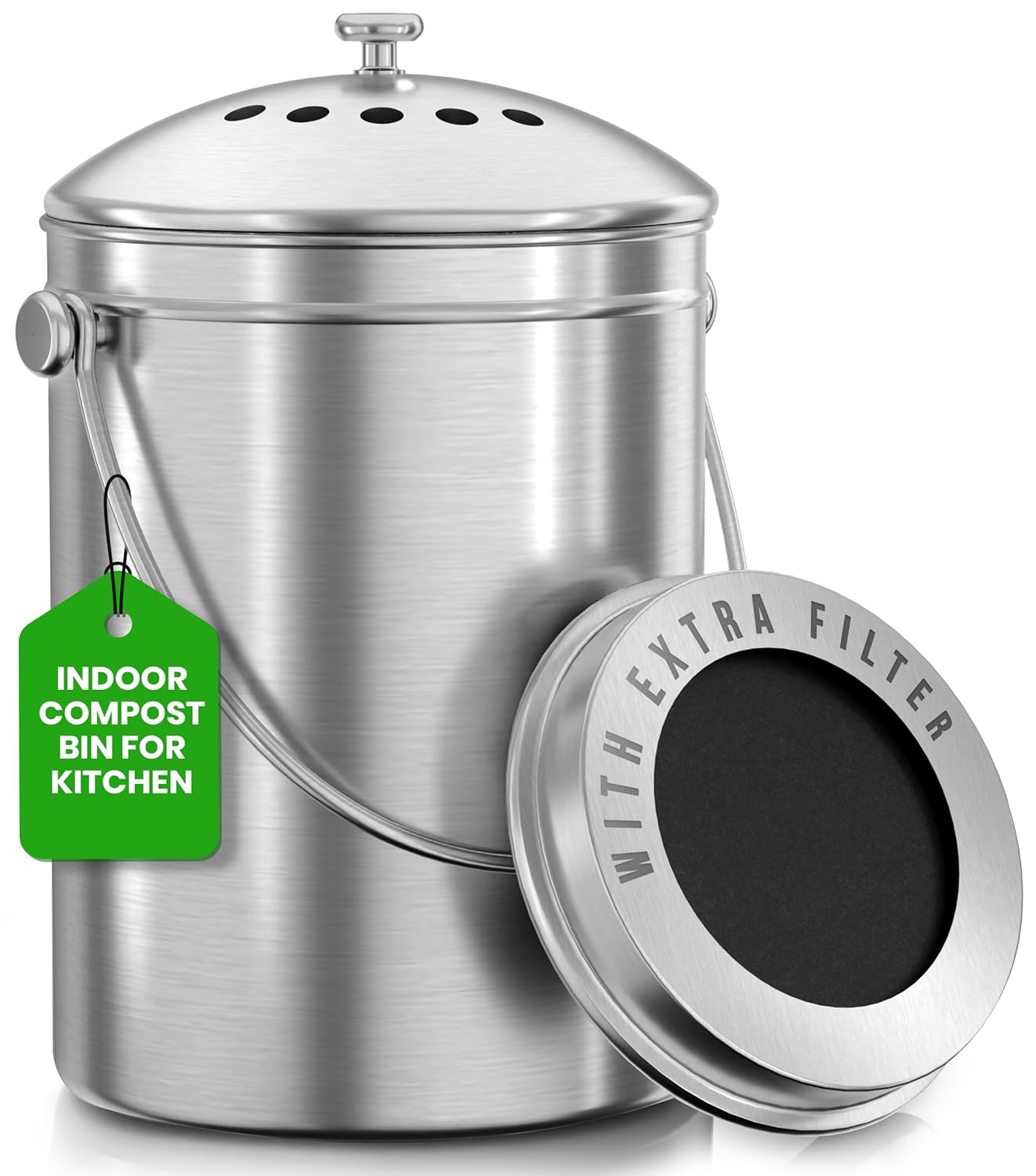
EPICA's stainless steel bin is the long-running bestseller that defined the category: a 1.3-gallon seamless body that never absorbs odors, an airtight lid with a replaceable charcoal filter, and a clean look that sits comfortably on any countertop. The airtight seal is the real star — reviewers consistently say they can't smell a thing even with the bin sitting right next to them. The 1.3-gallon size matches the 2–3 day emptying rhythm that keeps composting odor-free, and the stainless body rinses clean in seconds. If you want the proven, no-surprises option that reviewers have used for years, start here.
Pros: Airtight lid plus charcoal filter genuinely blocks odors; seamless stainless body won't absorb smells; 1.3-gallon size matches ideal emptying rhythm; years of strong reviewer track record.
Cons: Replacement filters are an ongoing small cost; heavier than plastic alternatives; hand-wash recommended for the body.
Check current price on Amazon →2. RED FACTOR Premium Compost Bin 1.3 Gallon
The dual-filter upgrade
RED FACTOR's 1.3-gallon stainless bin differentiates itself with an innovative dual-filter system — two activated-carbon filters plus a ventilated lid — for extra odor insurance in warm kitchens. The dome-shaped lid looks genuinely attractive on a counter (reviewers mention it often), and the seamless single-sheet stainless construction means no crevices for gunk to hide in. Spare filters are included in the box, so you're set for months before buying refills. Reviewers rate the soft-grip carry handle highly for the trip to the outdoor pile. If odor anxiety is your main concern, the dual-filter design is the strongest answer in the 1.3-gallon class.
Pros: Dual charcoal-filter system for maximum odor control; attractive dome-lid design; spare filters included in the box; seamless stainless body cleans easily.
Cons: Premium pricing over single-filter rivals; hand-wash only (not dishwasher safe); filter refills are brand-specific.
Check current price on Amazon →3. Full Circle Fresh Air Compost Bin
The airflow alternative
Full Circle takes a different approach to odor: instead of sealing smells in, the Fresh Air bin lets oxygen move through your scraps, which slows the anaerobic decomposition that causes stink in the first place. The result, reviewers say, is genuinely odor-free without relying as heavily on replaceable filters. At 1.5 gallons it's slightly roomier than the stainless picks — good for households that generate more scraps — and the recycled-plastic-and-steel construction is dishwasher safe for easy deep cleaning. It's also the budget-friendly and eco-conscious pick of the three. If you like the idea of solving odor with physics rather than filters, this is the one.
Pros: Ventilated design reduces odor without filter dependence; roomier 1.5-gallon capacity; dishwasher safe; made with recycled materials; usually the cheapest option.
Cons: Plastic can retain odors over very long use; the ventilated lid means it's not airtight like the steel picks; larger footprint on the counter.
Check current price on Amazon →Affiliate disclosure: As an Amazon Associate I earn from qualifying purchases. Read our full disclosure.