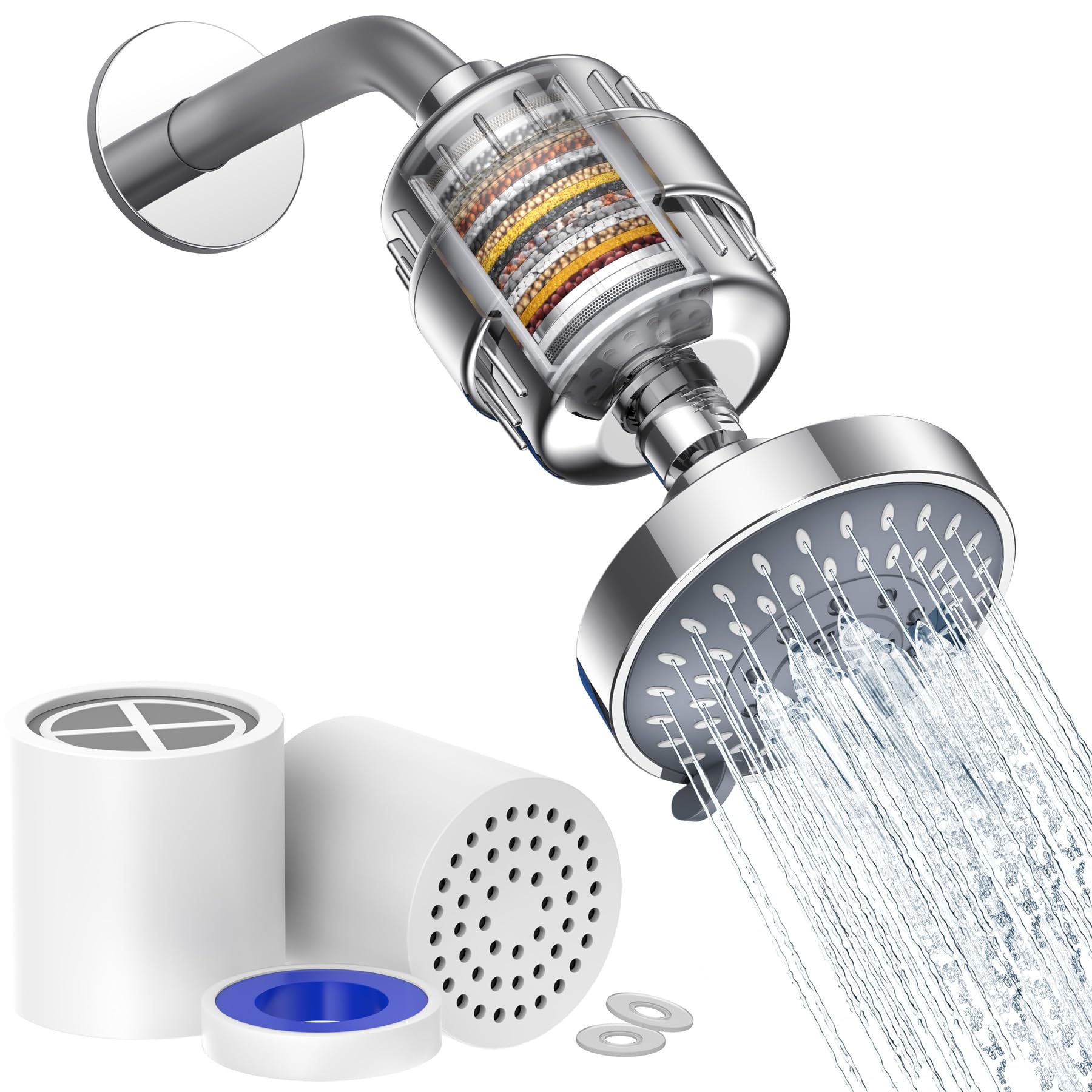
What to look for in a shower filter
First, set honest expectations. Shower filters excel at reducing chlorine, chloramine, sediment, odors, and some heavy metals — the things that dry out skin and hair and make water smell like a swimming pool. They also reduce some scale-forming minerals, which helps with that filmy feeling. What they do not do is truly soften hard water: genuine softening requires ion-exchange resin (a water softener). If your water is extremely hard, a filter will improve the chlorine and odor situation noticeably, but it will not stop all scale.
Filter media is where the real differences live. KDF-55 (a copper-zinc alloy) reduces chlorine and heavy metals and keeps working in hot water, where plain carbon struggles. Calcium sulfite is excellent against chlorine and chloramine. Activated carbon handles odors, organics, and taste-adjacent issues. Vitamin C neutralizes chlorine gently and is marketed for skin and hair benefits. Zeolite and ceramic media catch sediment and some hardness minerals. Multi-stage cartridges that combine several of these cover more ground than single-media filters.
Next, do the long-term math: cartridge life and replacement cost. Most shower filter cartridges last about 6 months or 10,000–12,000 gallons, whichever comes first. A cheap filter with expensive proprietary cartridges can cost more over two years than a pricier unit with affordable refills. Check replacement cartridge prices on the listing before you buy, and check availability — generic inline filters often accept widely available third-party cartridges, which keeps costs down.
Flow and pressure matter too. Any filter adds slight restriction as water passes through the media, so high-output designs are worth seeking if your home already has weak pressure. Look at GPM (gallons per minute) ratings where published, and read reviews specifically mentioning pressure — reviewers are blunt about this. Inline canister filters generally preserve flow better than compact filtered shower heads.
Finally, fit and installation. Nearly all US showers use standard 1/2-inch NPT threads, so most filters screw on tool-free between the shower arm and your existing head. Inline filters let you keep a shower head you already love; filtered shower heads replace it entirely. Housing durability varies — chrome-plated plastic is common and fine, stainless housings last longer in hard-water areas where plastic can get crusty.
- Media: KDF-55 + calcium sulfite + carbon covers chlorine, metals, and odor.
- Cartridge economics: 6-month typical life; factor replacement cost, not just sticker price.
- Pressure: choose high-output designs if your home already has weak flow.
- Fit: standard 1/2-inch threads; inline filters keep your current shower head.
- Honest expectations: filters reduce chlorine and some scale — true softening needs ion exchange.
The top picks
Affiliate disclosure: As an Amazon Associate I earn from qualifying purchases. Read our full disclosure.
1. AquaBliss High Output Revitalizing Shower Filter
The chlorine-busting workhorse
The long-running bestseller in this category: an inline multi-stage canister (redox media, calcium sulfite, activated carbon, ceramic mineral balls, and more) that screws between your shower arm and your existing shower head — no plumber, no tools. It targets chlorine, pesticides, heavy metals, sediment, and odors while maintaining strong flow, which is why reviewers with high-chlorine municipal water notice the difference in skin and hair within a couple of weeks. Cartridges are replaceable roughly every 6 months, and third-party refills are widely available.
Pros: Keeps the shower head you already love; strong chlorine reduction reviewers can feel in skin and hair; high-output design preserves water pressure; tool-free install.
Cons: Does not include a shower head; replacement cartridges are an ongoing cost; the canister slightly lengthens the shower-arm assembly, which matters on short arms.
Check current price on Amazon →2. AquaHomeGroup 20 Stage Shower Filter with Vitamin C & E
The all-in-one filtered shower head
Filter and shower head in a single unit: a 20-stage cartridge (including vitamin C and E, aimed at skin and hair benefits) inside a complete replacement shower head, with two spare cartridges in the box. It reduces chlorine, heavy metals, fluoride, and sediment while delivering a consistent-flow spray. This is the pick for renters or anyone who wants one purchase and one installation to solve the whole problem — unscrew the old head, screw on this one, done.
Pros: Complete replacement — no extra parts or adapters needed; two spare cartridges included, lowering the first-year cost; vitamin C/E formulation marketed for softer skin and shinier hair.
Cons: You are locked into their shower head and its spray patterns; "20 stages" is marketing layering — judge it by results, not the count; the head's spray options are basic compared with premium heads.
Check current price on Amazon →3. Culligan WSH-C125 Wall-Mounted Filtered Showerhead
The trusted-brand pick
From a company with genuine water-treatment pedigree: a wall-mounted filtered showerhead with five spray settings, NSF certified to reduce chlorine, sulfur odor, and scale. Culligan's filtration credentials and widely available replacement cartridges make this the low-risk choice — you know exactly what the filter is certified to do, and you will still be able to buy refills years from now. Installation is the standard unscrew-and-replace, with Teflon tape included.
Pros: Real water-treatment brand with NSF certification; five spray settings versus the usual one or two; replacement cartridges are easy to find long-term.
Cons: The filter housing makes the head bulkier than standard heads; replacement cartridges cost more than generic inline refills; filtration capacity is lower than large inline canisters.
Check current price on Amazon →Affiliate disclosure: As an Amazon Associate I earn from qualifying purchases. Read our full disclosure.